

The age-old saying that “a dog is a man’s best friend” is more than just a sentimental statement—recent scientific research strongly supports this idea. Dogs and humans share a unique bond built on mutual affection, and it’s now clear that the relationship is far from one-sided. In fact, studies reveal that dogs genuinely enjoy being around humans, not just because they get food, but because they crave companionship, affection, and emotional connection.
The Traditional View: Conditioning and Treats
For many years, our understanding of dog behavior was heavily influenced by classical conditioning—most notably the work of Ivan Pavlov. Pavlov’s experiments demonstrated that dogs could be trained to associate a neutral stimulus (like a bell) with something desirable (like food), ultimately eliciting a conditioned response (salivation). These findings laid the groundwork for much of modern dog training, where positive reinforcement using treats became the dominant method.
This led to a widely held belief: dogs obey humans primarily because of food rewards. In other words, it was assumed that the human-dog relationship was largely transactional—dogs performed behaviors in exchange for treats. This concept became so entrenched that many questioned whether dogs felt any real affection toward humans or simply saw them as a reliable food source. Are they really man’s best friend?
The New Question: Do Dogs Prefer Affection Over Food?
However, a growing body of research challenges this limited view. One particularly notable study led by neuroscientist Dr. Gregory Berns at Emory University sought to explore whether dogs value food more than human affection—or vice versa.
In this study, Berns and his team used functional MRI (fMRI) to examine the brain activity of 15 dogs. These dogs were trained to lie still inside an fMRI machine while researchers measured their neural responses to various stimuli. The dogs were exposed to different cues: some signaled food, while others signaled praise from their owner.
The Surprising Results
The results were striking. Out of the 15 dogs tested, 13 exhibited stronger brain responses—specifically in the region associated with reward processing—when they received verbal praise or physical affection from their owner, rather than food. Only two dogs showed a preference for food rewards over human interaction.
To further validate the findings, the researchers conducted a second experiment involving a Y-shaped maze. One path led to a bowl of treats, while the other led to the dog’s owner. Dogs who had shown stronger neural responses to praise consistently chose to go to their owner over the food.
What This Means for Dog Owners
These findings suggest that dogs are far more emotionally complex than once believed. They are not just “Pavlovian machines” responding to food stimuli; they form genuine emotional attachments with their humans and often prefer affection over a treat.
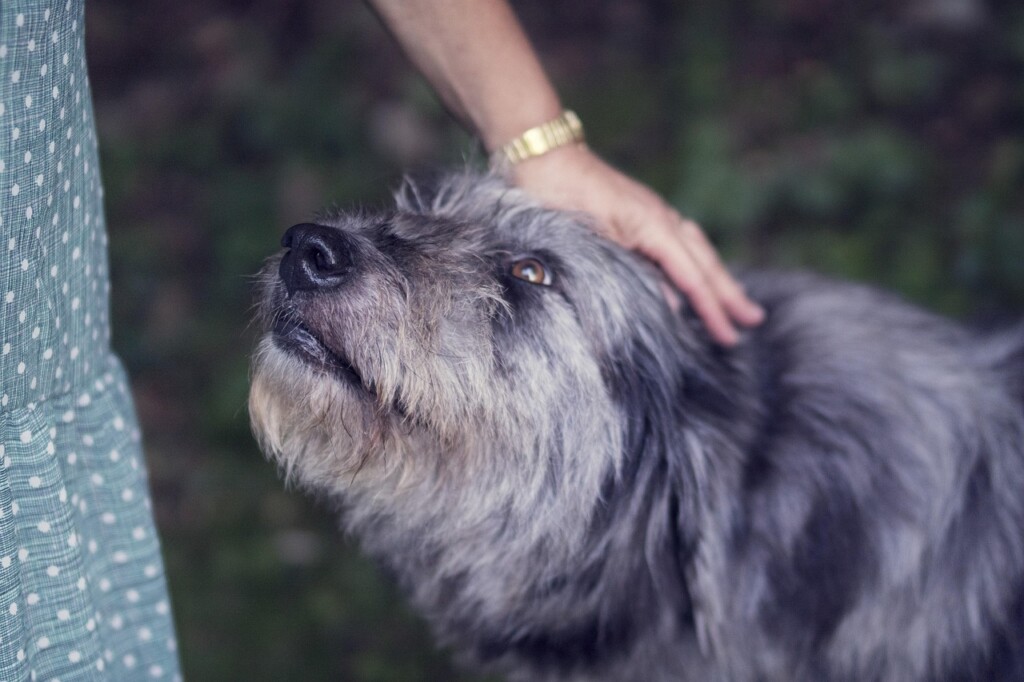
This has important implications, especially when it comes to training and bonding with dogs. Positive reinforcement remains an effective and humane method for training, but the form of reward doesn’t always have to be edible. Simple acts like petting, praising, or even making eye contact can be just as powerful—and in some cases, even more meaningful to the dog.
Additionally, this research is helpful for managing dogs that are overweight or on restricted diets. Instead of relying solely on treats, owners can use praise and affection to reinforce good behavior and strengthen the emotional bond.
Gulf Coast K9 Dog Training Loves Your Dog!
Science now confirms what many dog lovers have long believed: dogs truly enjoy being with their humans—not just because of food, but because of love, attention, and companionship. So next time your furry friend does something right, don’t just toss them a biscuit. Take a moment to offer some heartfelt praise or a belly rub. Your dog will appreciate it just as much, if not more.
If you are struggling to connect with your best friend, call Gulf Coast K9 Dog Training today. We have many classes and training programs that are geared towards creating that special bond.